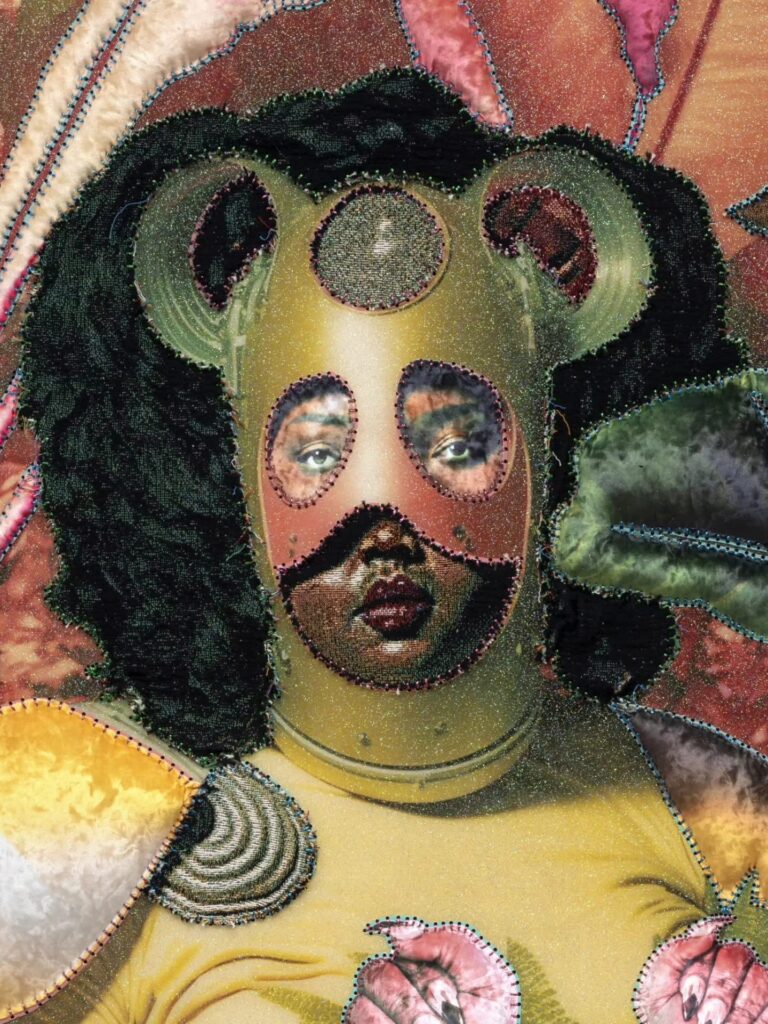
April Bey lives and works in Los Angeles as an artist and tenured professor teaching Studio Design at Glendale Community College. She was gracious enough to take time away from a family island homecoming to meet WYBE Magazine on a Sunday morning in the beautifully designed and secluded library at The Island House, located in the hills of West Nassau, home to TERN Gallery.
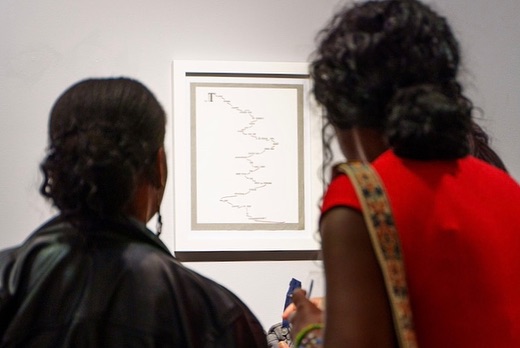
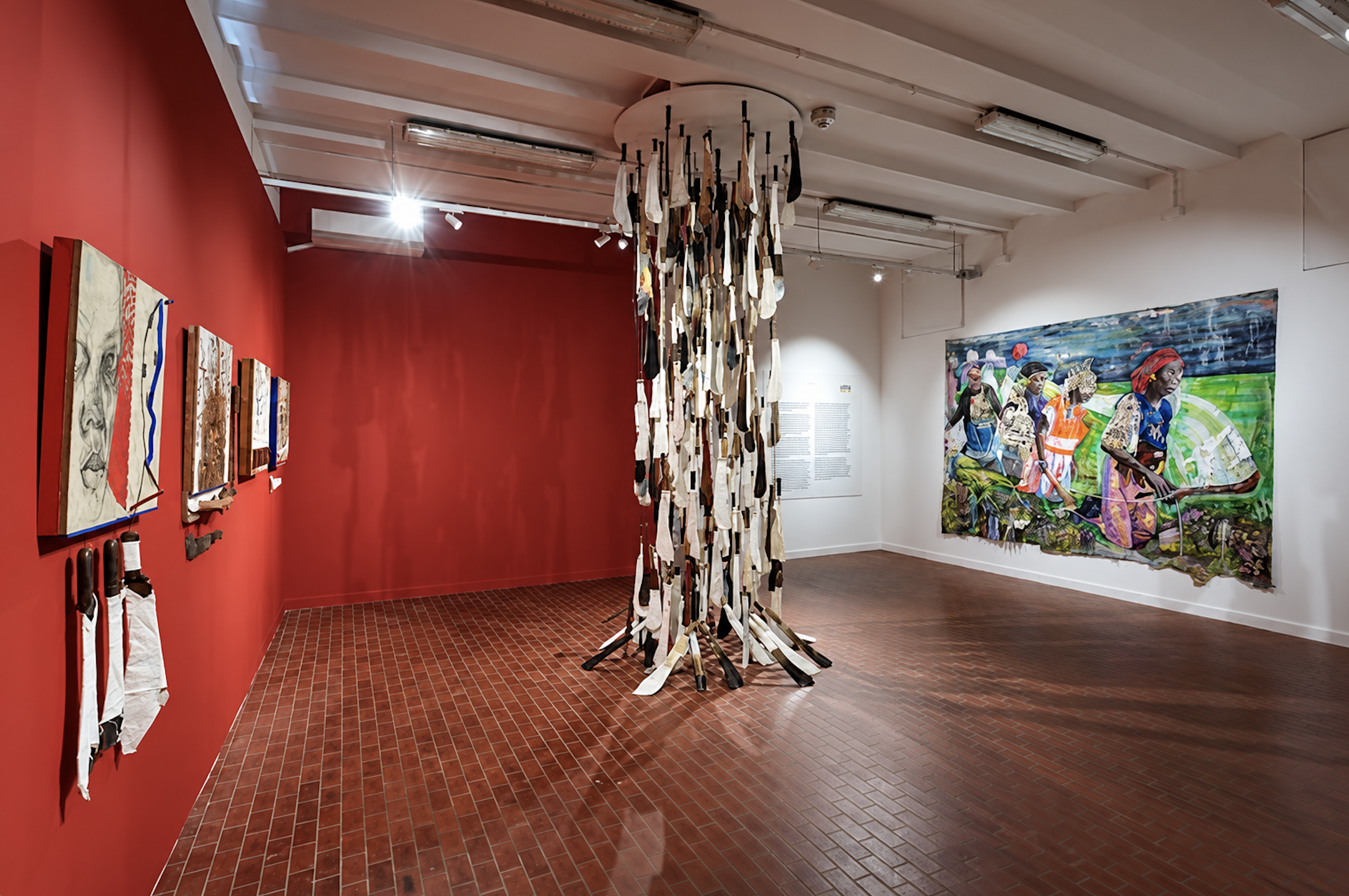
As we begin, TERN Executive Curator Amanda Coulson hangs two of Bey’s works on the interior walls, framing our intimate scene almost like a movie set. Seeing her pieces hung like a collector is thrilling for an art nerd like me who has been following her work since 2021, first discovering her on Instagram.
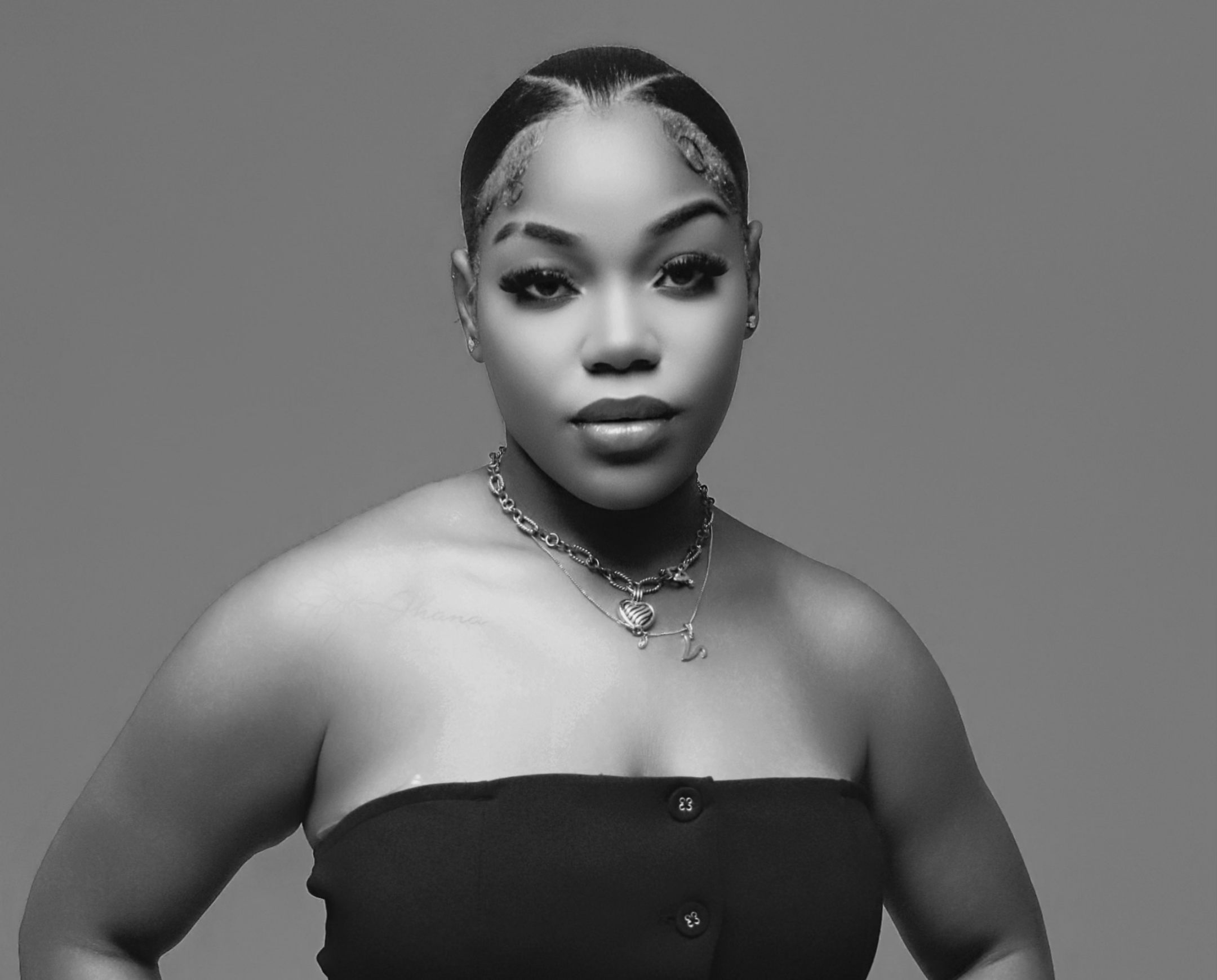
Bey arrives with friends, casually dressed in flowing patterned pants and a graphic T-shirt. Bright curls frame her face. She has a scatter of freckles and an open, candid conversational style. You can tell she’s a great teacher.
I have a thousand questions about her work, her global impact, her inspirations, and executing a major public art project as the first Artist in Residence the pretigious Knight Foundation in Miami, featured in the immersive, community driven installation of the new 10-mile linear Park ‘The Underline’ where her contribution of four public columns honors the historic Bahamian community that built Miami.
Yet, our conversation keeps returning home. Enthralled by the comforts of fruit trees,sea breezes and emotional connections, part of Bey’s interest in creating more work in The Bahamas is surprisingly practical.
“In The Bahamas, I haven’t heard someone say no,” she says. “They take a minute, talk it out, come back and say, maybe.” That “maybe” matters, it expands the possibilities of Atlantica with Earthly skills that are limited and fleeting.
Whether Bey needs someone who understands a particular garment construction, can interpret an specific inspiration point or even allow her to take over a hair salon for an installation — clients included — she finds a creative willingness in The Bahamas that doesn’t exist elsewhere., An island mindset of: we’ll figure it out.
She contrasts that with a major creative and financial center such as Los Angeles or Miami, where highly specialized skills and regulation can also create rigid boundaries around what someone will and won’t do. In The Bahamas, “maybe” leaves room to invent something new.
There is another reason coming home matters. Showing internationally has made Bey acutely aware of how narrowly The Bahamas can still be perceived abroad. Her work pushes against the familiar fantasy-island imagery of cruise ships and rum punch by offering something more intriguing and culturally authentic.
“It gives them more of the culture,” she says. “People realize it’s not just about vacation.”
The Next Generation
The growing international attention around Caribbean contemporary art and Afrofuturism excites Bey, particularly because younger Bahamian artists can now see artists from their region represented by respected galleries, collected by museums and excelling at major international fairs.
But visibility can be deceptive. In a digital world career recognition can appear instantaneous. What young artists don’t necessarily see are the years underneath those moments: technical skill-building, an investment in fine arts education, finding funding, constant experimentation, bias and the real life business of the professional art industry.
“Young artists are skipping ahead before they’re ready,” Bey tells me. She remembers her own years learning to edit, listen to mentors, accept rejection, setbacks and still remain committed to her practice.
For Bey, though, the real need is connection, not attention. Artists have to deliberately build networks that support one another. When Bey has to turn down an opportunity, she thinks about who else she could recommend — particularly women, often overlooked in the art industry. She notices whose exhibitions people attend, whose careers get amplified and whose names continually enter conversations about Bahamian contemporary art.
Her feminism is subtle but deliberate. Success isn’t only about getting through the door. It’s about who you bring through with you.
Who Gets to Collect?
Bey’s own success eventually presented another strange question: Who gets access to contemporary art?
As her market grew and the value of her work increased, some of the people who genuinely connected with it could no longer afford to own it.
So Bey created another system: the Equity in Collecting Program, an annual program offers qualifying collectors an opportunity to purchase select works at a 90% discount, with sponsoring collectors and additional resources helping fund the difference.
The consideration for access and inclusion extends one of the central ideas running throughout Bey’s practice.
The future of Bahamian and Caribbean contemporary art isn’t simply about which artist becomes internationally successful next. It’s about creating the foundation underneath that success: artists, mentors, galleries, collectors, fabricators, institutions and communities willing to say “maybe” when someone proposes something they haven’t seen before. That may be the most important reason for Bey to come home.
Because sometimes “maybe” is exactly where something new begins.
NEXT: Part III — Message From Atlantica: April Bey Wants Humans to Turn Their Hearts Back On